
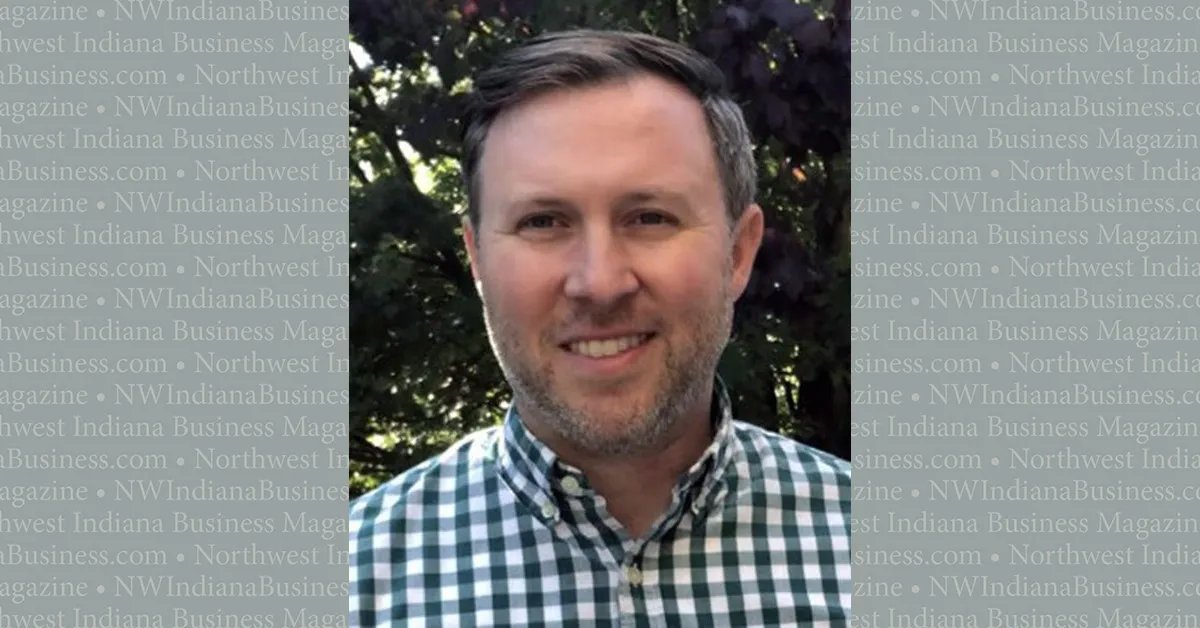
Adopting ‘tech mindset’ key to leveling up Region’s economy
Silicon Valley is home to game-changing technological and innovative developments that have reshaped the world. Giants like Apple, Google and Nvidia, with a combined market cap over $10 trillion, don’t just dominate headlines — they redefine economies.
Yet, there is no secret sauce for their breakthroughs. What sets them apart is a “tech mindset” — a way of thinking that moves fast, embraces calculated risks, adapts to market trends, solves customer problems, and leverages technology for asymmetric competitive advantages.
The good thing is this mindset isn’t exclusive to Silicon Valley. Companies in Northwest Indiana can adopt it to accelerate growth, nonprofits to amplify impact, and governments to serve citizens better.
There are three tools that stand out as accessible and powerful for the Region: product management, agile methodology, and data science and artificial intelligence. These aren’t abstract concepts — they’re practical, learnable and proven beyond Silicon Valley.
First, product management is at the intersection of business, technology and design to understand customers — not just the things they say they want, but their spoken problems. A product manager translates those insights into solutions people love, whether it’s an app, a service or a physical good.
For NWI businesses, this means learning what drives customers psychologically.
Imagine a local steel fabricator discovering industrial clients value speed over price, then building a custom ordering platform that prioritizes speed and transparency, winning contracts by relieving real pain points.
Product management ensures you solve the right problems, not just churn out features. It’s the difference between a gadget that gathers dust and one that becomes indispensable.
Second, agile methodology swaps rigid, top-down plans for speed and flexibility. Born in software development but now universal, agile breaks projects into short cycles called sprints — typically one to four weeks. During sprints, teams collaborate to ship a minimally viable product without the bells-and-whistles to gather feedback and adjust fast.
For NWI, a city could test a new pothole repair system in one neighborhood before scaling it city-wide. Or a restaurant might prototype a new menu, tweaking it based on customer reactions. Agile’s strength is failing small and learning fast, keeping you focused on what works.
Finally, data science and AI transform raw data into actionable insights and predictive solutions that drive smarter decisions. Data science sifts through numbers to uncover patterns — like why a NWI retailer’s sales dip — delivering clear, actionable insights.
For one project, I helped a regional food manufacturer use data science to uncover consumer preferences to ignite a national expansion strategy.
AI takes it further, automating decisions or predicting trends. County officials could use this combo to analyze crime patterns and deploy policing resources efficiently, while a steel manufacturer might predict machine failures, slashing downtime and costs. Data science and AI take unused data to uncover hidden insights for asymmetric advantages.
These tools and techniques don’t require a PhD or Palo Alto address. They’re learnable and ready for Region leaders, from CEOs to mayors, to cultivate a “tech mindset” and level-up the economy of NWI. Here’s how to start.
Embrace education: High-quality, affordable tech bootcamps like General Assembly, Flatiron School and Bloomtech offer online courses in product management, agile and data science. I took General Assembly classes where I attended classroom instruction that I applied to hands-on projects — building real dashboards, crafting product roadmaps. These programs, some less than $5,000, teach these skills in months, not years.
Build a tech culture: NWI organizations — manufacturers, city halls or small businesses — can weave technologists, product managers, and data scientists into their operations, from strategy to delivery. This isn’t about hiring Silicon Valley transplants; it’s about empowering local talent to experiment and innovate. By fostering collaboration and curiosity, NWI can transform its value stream — making every process smarter, faster and more responsive to real-world needs.
Experiment locally: Launch pilot projects to test these tools. A city could use agile to streamline permitting, cutting red tape for new businesses. A manufacturer could train a product manager to revamp a product line using customer feedback. Start small, measure results, and scale what clicks — lean startup style.
NWI already has the raw materials: grit, diverse industries and ambition. By embracing product management, agile methodology, and data science/AI, the Region can adopt a “tech mindset” that borrows Silicon Valley’s thinking without copying its playbook. The tools give businesses asymmetric advantages, nonprofits broader impact and governments efficiency. The time is now — let’s make NWI a hub where innovation isn’t borrowed, it’s built. •
Read more stories from the current issue of Northwest Indiana Business Magazine.

Flexibility for working mother

Heroic values on display

One-stop print shop

Power of collaboration

Avoid the unexpected

Childcare challenge

Beyond the prescription pad

New life for dormant buildings

Banks keep branching out

Professional advancement

In this issue
While artificial intelligence dominates discourse these days, I keep hearing a growing drumbeat that Gen Z and millennials are tired of constantly scrolling. They increasingly are seeking analog ways to…
