Careful planning builds framework for Region’s next generation of entrepreneurs
Entrepreneurial thinking is a pathway to meaningful work, economic resilience and financial independence. Nowhere is that more true than in the booming entrepreneurial culture of Northwest Indiana.
The Region is embracing a more diversified, innovation-driven identity, where entrepreneurship is intentionally cultivated and integrated. Leaders, educators and community members are working together to prioritize entrepreneurs. Their multi-pronged approach combines education, mindset development, support and real-world opportunities.
“Entrepreneurship is the creative backbone of the U.S. innovation economy,” according to Alexandra Moran, assistant professor of practice in management at Purdue University Northwest’s College of Business. “It’s built into the system. It’s institutionalized. You’re encouraged to be creative, to take risks. That’s incredibly important for the entire country but also for regions like ours.”
The entrepreneurial shift in Northwest Indiana didn’t happen overnight. The Region with deep industrial roots faced a stark question when manufacturing shifted and declined: What comes next?
“All of these cities had to transform themselves,” Moran said. “We weren’t making airplanes anymore. As manufacturing shifted, universities along the Rust Belt corridor became catalysts for innovation. This is the evolution of what’s next.”
That progress is visible across Northwest Indiana, where entrepreneurship has emerged as a central strategy for economic renewal. Students, college graduates and community members alike are turning ideas into businesses, products and services that shape local economies and personal careers.
Entrepreneurship matters
Entrepreneurship is often associated with tech startups or flashy inventions, but it touches nearly every sector of daily life.
Private doctors’ offices, dental practices, franchises and restaurants all require entrepreneurial thinking. These Main Street businesses fuel the economy.
“Over 99% of businesses in the U.S. are small businesses,” said Jana Szostek, Indiana University Northwest Business Academy director and director for assessment center and professional development. “Entrepreneurs hire a large percentage of the workforce, contribute significantly to the tax base and draw customers into communities.”
When people visit one business, they often visit others nearby, creating a ripple effect.
“Entrepreneurs are intimately connected to their community and highly engaged in community development,” Szostek said. “All of these activities create a community where people want to belong and visit, thus driving economic development.”
According to TechPoint’s 2024 Indiana Venture Report, Indiana startups attracted $1 billion across 166 deals, one of the highest totals in state history. The Indiana Business Research Center noted employment growth in professional, scientific and technical services. The numbers signal a shift toward knowledge-based and entrepreneurial careers.
Entrepreneurship in Northwest Indiana is increasingly tied to equity and inclusion.
“Entrepreneurship is essential to the Region’s growth, and that growth must include traditionally marginalized communities,” said Faith Spencer, president and CEO of the Gary-based business incubator IronWorkz. “These entrepreneurs bring lived experiences and perspectives that help identify challenges and gaps others may overlook, leading to solutions that are more inclusive, innovative and impactful for the entire community.”
This philosophy is embedded in programs throughout the Region.
Leaders in Michigan City view entrepreneurship as a tool for economic development and social mobility. The city has kicked off multiple programs, including the Michigan City Entrepreneurship Development Initiative, in collaboration with SCORE, the Indiana Small Business Development Center and the chamber of commerce. Their initiatives echo those of communities across the Region.
“Entrepreneurship is not only about business success but also community empowerment, inclusive growth and neighborhood revitalization,” said Tracey Clark Jeffries, Economic Development Corp. Michigan City Economic Recovery Corps fellow.
Creating mindsets
One of the most important shifts is the recognition that entrepreneurship isn’t just about business plans — it’s about mindset.
For Hoosiers in the Region, an entrepreneurial mindset may be intrinsic or learned.
“Some people naturally see the world as a place to create, challenge systems and imagine what’s possible, but even they need guidance and structure to become strong founders,” Spencer said. “Others may not start with that mindset, yet with exposure, education and support, their perspective can shift and unlock entrepreneurial potential they didn’t know they had.”
Experiential learning plays a critical role with teachers and mentors across the Region, encouraging students to observe their surroundings and ask: “What’s missing? What could be done better?”
These programs emphasize a culture of pitching ideas, building prototypes, managing budgets and testing products, in contrast to traditional lectures during which students are passive listeners.
“At the university, we’re trying really hard not only to create that culture in the community but to educate,” PNW’s Moran said. “Textbooks aren’t as effective as hands-on learning. It’s incredibly rewarding to see those lightbulbs go on.”
Moran is seeing the impact of business classes and entrepreneurial programs for high school students.
“Students are coming out of high school much more prepared when they arrive at college,” Moran said. “They’re bringing their expertise to classes. They have a different level of understanding of growing an enterprise.”
Michigan City has leaned into this early exposure through youth entrepreneurship bootcamps. These programs introduce entrepreneurship concepts, idea development and business basics. Participants practice monetization through pitch exercises and community showcases.
“Entrepreneurship is a lifetime of knowing your strengths, knowing what you’re not good at and augmenting those skills,” Moran said. “You have to be a Jack or Jill of all trades to run a successful business.”
Academic anchors
Higher education institutions are a linchpin in Northwest Indiana’s entrepreneurial ecosystem — teaching skills and connecting students with opportunities.
“It is very challenging to turn an idea into something that generates income,” said Noah Miller, founder of Mr. Miller’s Mobile Detailing in Hobart. “That can be due to lack of capital, a poor business model or misunderstanding the market.”
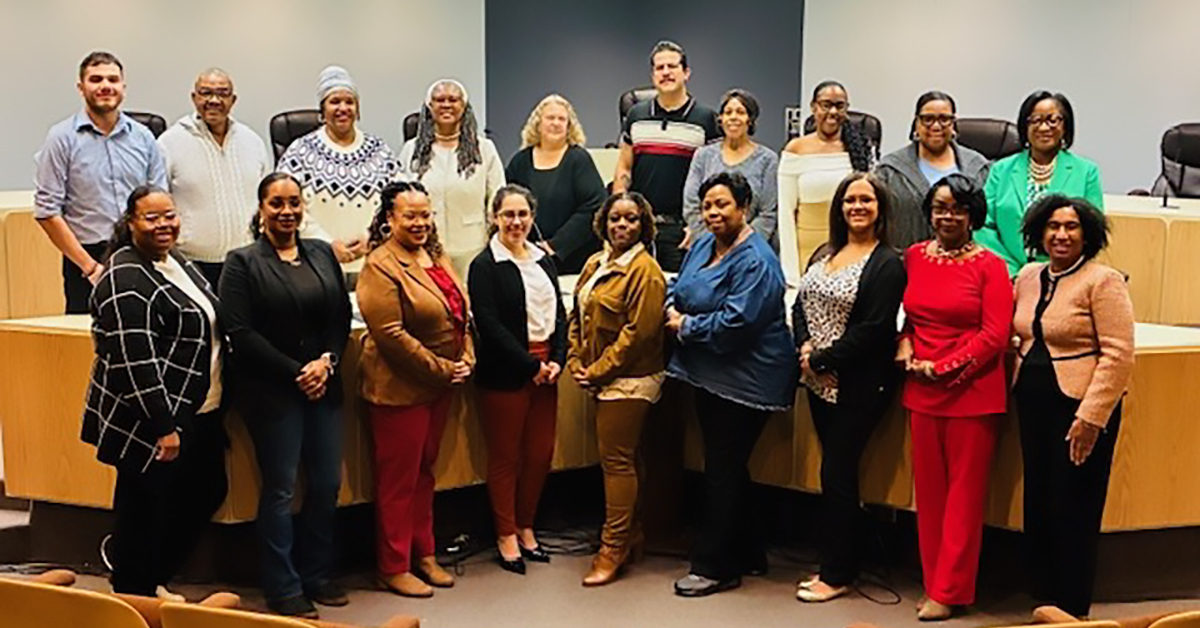
Miller is a graduate of IUN’s Supporting and Empowering Entrepreneurial Development program, which is a component of the university’s Business Academy. The academy is an Entrepreneurial Support Organization, offering workshops and a small business clinic. The SEED program is a collaboration with the University of Notre Dame’s Urban and Poverty Business Initiative. Launched in July 2025, the program offers aspiring entrepreneurs a bootcamp, mentoring experiences and opportunities to showcase their businesses.
Miller enrolled in the SEED program to connect with other entrepreneurs and to learn how to grow his own business.
“The program has helped me by educating me on how to market effectively, negotiate deals, how to use leverage to acquire what is needed for my business and how to properly legitimize my company,” Miller said.
Naté Billingsley-Walton, owner of Simply Dumping Legally in Gary, is another program graduate.
“My motivation was to collaborate with like-minded individuals and to refine my ideas into a viable business centered on a cause I am deeply passionate about — reducing recidivism,” Billingsley-Walton said. “My goal is to build a sustainable, profitable enterprise that not only serves the community, but also creates meaningful opportunities for the individuals who live within it.”
Billingsley-Walton said the program helped her articulate ideas to investors and gave her business planning, marketing and financial management tools. It brings organization to her personal and professional goals.
“Programs like SEED are vital because they help shape the economic direction of smaller communities by supporting the success of local businesses,” Billingsley-Walton said. “These businesses, in turn, create employment opportunities and ensure that financial resources continue to circulate within the community, strengthening the local economy and promoting long-term sustainability.”
Purdue University Northwest also offers entrepreneurs a boost. In addition to coursework, degrees and certificates, PNW’s College of Business and Office of Commercialization and Research host the Big Sell. The top three contestants have a chance at cash prizes during the annual pitch contest.
PNW’s Roberts Impact Lab, which is scheduled to open this year, aims to serve as a regional hub for business growth. The lab will offer spaces for testing, prototyping and training.
PNW collaborates with VentureWell, a national organization working to cultivate a pipeline of inventors, innovators and entrepreneurs. VentureWell supports faculty at colleges and universities through funding, training and community.
“It’s nice to be in the pool with your friends. It helps us see we’re doing the right things,” Moran said. “The more we can tell the story, the better it feels and the more people we’re putting in the boat. We want to get as many people as possible in the boat. That’s how we transform the Region.”
Entrepreneurial success
Founders across Northwest Indiana are in all phases of their journeys, but perhaps the most powerful inspiration comes from young entrepreneurs already making an impact.
Isaiah Harvey, a 17-year-old inventor born with bilateral hearing loss, is a shining example. Harvey developed SignalSafe — a smartwatch prototype that uses haptic alerts to warn hard-of-hearing users of fire or carbon monoxide alarms.
“When I was younger, I was scolded for not responding to a fire alarm. I was in the restroom and didn’t hear it,” Harvey said. “When I came out, everyone was outdoors; I didn’t know what was going on. My watch will work in tandem with hearing aids and alarms to ensure that safety alerts aren’t overlooked.”
Harvey won the 2025 Northwest Indiana High School Pitch Competition, sponsored by the Society of Innovators at PNW. This was his second year participating. He has since been inducted into the Massachusetts Institute of Technology’s IDEA2 global pitch program, a six-month mentoring program for biomedical innovators.
“I want to study biomedical engineering and create my very own Fortune 500 company,” Harvey said. “I hope to create medical devices for doctors all across the world so that all people receive the medical attention they need.”
Path forward
The entrepreneurial spirit of Northwest Indiana is a tapestry woven by threads of academic programs, mentorship networks, community resources and individual grit.
While the Region’s startup ecosystem is evolving, its momentum is undeniable.
“Three generations of founders exiting universities can transform a region,” Moran said. “We’re seeing the first founders coming out of our universities now and that’s why this moment is so exciting.”
Dreamers wondering if someone like them can start a business are now met with a clear answer from their communities: yes — with education, support, practice and resilience.
For students planning their careers, entrepreneurship isn’t a sideline; it’s a legitimate, structured path that can lead to innovation, personal fulfillment and economic growth in communities across Northwest Indiana. With the Region’s stakeholders building a scaffold of resources and fostering creative mindsets, the next breakthrough business could start right here in a classroom, a garage or a coffee shop brainstorming session. •
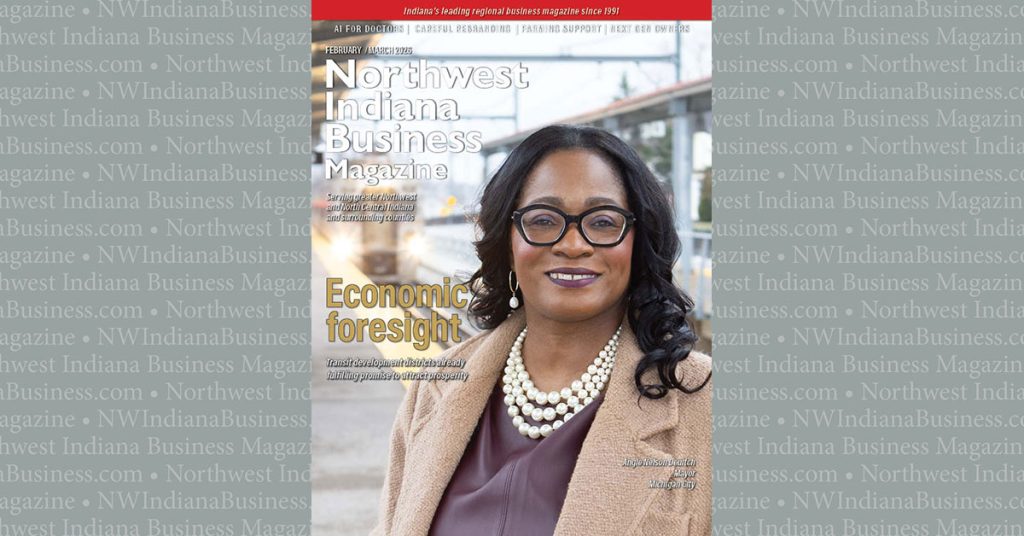
Read more stories from the current issue of Northwest Indiana Business Magazine.
One step at a time
Region on prosperous path
Paladin’s dream hub

Making surgery safer

A value-added food chain
Change for the better
New medical partner
Economic foresight
Professional advancement