Digital technology injects innovation into bookkeeping
Olivia Diaz didn’t feel as confident as she looks in her publicity photos when she opened Frankie’s Barbershop in the Town of Porter a year and a half ago.
“I had to deal with more customers, pay rent and the contractor who did $12,000 of work renovating my new space, keeping up with tax forms and the (utility) bills. And I sell ice cream here,” Diaz said.
“So, how do I, as a new business owner, do all of this? I felt like I was in the dark. I can’t just write expenses down on a piece of paper anymore.”
A business friend referred her to Stephanie Kuziela’s Duneland Accounting in Chesterton. Kuziela clipped through Frankie’s tangled transactions, leaving her finances as smooth as a gentleman’s fade cut.
Tens of thousands work in accounting from South Bend and southern Michigan west to Chicago’s suburbs.
They range from sole proprietors to Michigan’s Hungerford, which employs 100 accountants who serve 6,600 clients, and Kruggel Lawton CPAs, with offices in South Bend, Portage and cities in Michigan and Tennessee, that are on track to close this year with $28 million in billings.
They and accountants across the country work with digital platforms that have automated the monotonous work once done with hand-cranked adding machines and entered into cloth-covered journals.
Robert Wichlinski, a Valparaiso University lecturer with 40 years of accounting experience in the public and private sectors, said most accounts rely on QuickBooks Online.
“Transactions used to generate paper, like receipts, and someone had to gather and compile all that. Now, the transaction data flows right into the system, already categorized,” he said.
“Traveling sales staff mileage expenses are now generated by global positioning systems and delivered to their phone. Once you’ve eliminated all of those, an accountant’s work becomes data science and decision support.”
Hungerford and Kruggel Lawton both employ QuickBooks, in addition to payroll software Gusto and customer management reports by Fathom.
Hungerford also uses BILL.com’s accounts payable and spend and expense management system, Paylocity and CCH’s tax software. Kruggel Lawton also manages payroll with ADP and Paychex, and financial analysis with Jirav and Cash Flow Frog.
Adam Schwelnus and Cody Newport, Kruggel Lawton partners, said QuickBooks Online and similar cloud-based accounting platforms have evolved from manual legacy systems to now streamlined data entry, bank reconciliations, invoicing, and tracking of accounts payable and receivable with improved speed and accuracy.
Accessibility/cybersecurity
Technology that allows for virtual communication has positives and negatives.
“Since 2020, we’ve adopted a flexible approach to client communication, with a growing emphasis on teleconferencing,” said Gregory R. Ward, a CPA and accredited business evaluation specialist with Swartz, Retson & Co. based in Merrillville. “Sensitive meetings still take place in person; many informal discussions are often held through video conferencing.”
Virtual meetings have allowed companies to expand outside their physical locations.
“This change has improved efficiency and allowed us to expand into new markets as teleconferencing has proven to be an effective way to work with clients in different locations,” Ward said.
Emily Paszkowski, CPA and a Hungerford shareholder, echoed that sentiment.
“Most of our work is done remotely,” she said. “Our firm and the community we serve still value face-to-face communication, so we plan for those interactions to be more strategically focused. Typical weekly or monthly communication is performed via video conference.”
The advent of cloud-based accounting requires attention to shielding clients’ proprietary data.
Simon Hough, Hungerford chief technology officer, said cybersecurity is “the bedrock” of maintaining trust with clients.
“We are incredibly strict about who on our team can access client information,” he said. “We then back that up with technology that encrypts and protects data at every step.
“An alert team member who can spot a scam is just as important as any software, which is why we’re so committed to ongoing training.”
Hungerford also is strict about their process of vendor management.
“Before we work with any third-party service, we conduct a deep review of their security practices to ensure they’re as committed to protecting data as we are,” Hough said.
They rely on sophisticated encryption to ensure data is secure.
“Blockchain creates a single, shared ledger that can’t be secretly changed,” Hough said. “This gives us the benefit of a tamper-proof audit trail without ever sacrificing the strict client confidentiality we’re committed to.”
Kruggel Lawton partners Schwelnus and Newport said their firm applies multiple layers of protection, limiting access to sensitive information, avoiding storing personal or private information on shared network drives and conducting annual cybersecurity training.
AI’s impact
Regional experts agree artificial intelligence is already changing the accounting profession — but not replacing it.
“AI, quantum computing and mobile computing are going to change the nature of our relationships with each other and our financial assets,” said Wichlinski, who has owned Crown Point-based ON-SITE Computer for 33 years.
“But the introduction of AI doesn’t translate into making a career in accounting obsolete. I believe it translates into a renaissance. I see opportunity coming out of the chaos of chance.”
He said accountants in the future will be screening clients’ interests from “all these other people who come after us and want to manage our money,” he added.
Daniel Boivin, a Hungerford manager, added that AI has already caused a shift in how accounts payable and accounts receivable are managed.
“In A & A work, new technologies can assist in providing good customer service experience, but it will never get rid of the relationships we build with our clients through years of work together,” Boivin said. “If anything, new technology has improved the flow of information from the client to us.”
That’s true when taking the long view of a client’s financial outlook.
“Currently, we utilize (AI) to analytically review changes in accounts over the year, and it gives us insight into balances we should spend some more time inquiring on,” Boivin said.
“It also allows us to get rid of some of the more mundane work of reviewing ledger detail for unusual transactions. It does not replace the work we do but allows us to improve our work product and get a fuller understanding of clients’ financial reporting in the same amount of time.”
Time is one commodity worth saving for accountants and their clients.
“By saving time on the transactional, data entry and formatting of tasks, we are more available for quality, high value conversations with our clients, learning the nuance of the client’s industry and individual business needs to provide more individualized support,” Paszkowski said.
Kruggel Lawton Partners Schwelnus and Newport said AI already is beginning to reshape the accounting profession, and its impact will only grow, freeing up accounts time to focus on higher-level work like strategic analysis, planning and advice.
Talent shortage
Although the U.S. Bureau of Labor Statistics projects a 5-percent growth in job openings for accountants, the optics for accountants don’t always attract new talent.
The bureau also reported that the industry’s workforce has shrunk by more than 17% since 2020. Many CPAs are retiring, fewer students are choosing the accounting field and the perception that bookkeeping work is “boring” are some of the reasons some firms find it difficult to hire new talent.
“We’ve seen a shortage of experienced accountants over the past several years,” Ward said. “Accounting standards have continued to get more complex, which requires us to have more experienced staff. However, we haven’t noticed a decline in the availability of accounting students in our area.”
Others are staying on top of the hiring game by thinking long term. Munster-based McMahon & Associates CPAs hired Joel Cooper in 2015. He became a partner in 2024. At CLH, CPAs & Consultants in Michigan City, Angela Grothaus and Lisa Human both were promoted to partner this year. Both started at the firm in 2014. Regional firms also have reported hiring accountants at all levels this year.
Wichlinski suggested that the hiring trend also might not be as negative as it looks.
“If you look at all the institutions around Northwest Indiana, I’m sure the numbers of people who take traditional accounting have gone down,” Wichlinski said. “But I think there are just as many people engaged in the accounting process. We call them something different now with degrees as econ majors and data science majors.”
Wichlinski also said companies might want to reconsider language in their job descriptions.
“When corporations are advertising for people in the accounting field they want to hire, they designate accounting or its equivalent,” Wichlinski said. “If you just ask for people with a Bachelor of Science in accounting or a (Certified Public Accountants) CPA, you may not find enough candidates to select from.”
More than 10,000 people are credentialed in Indiana as CPAs, after having completed their college training requirements, two years of work experience and passed the Uniform CPA exam.
Their CPA state license allows them to perform state-licensed auditing and forensic accounting work, in addition to bookkeeping and more general accounting skills, said Emma Yarber of the Indiana Professional Licensing Agency.
Kuziela said she is not pursuing a CPA certification even though she has enough college credit hours and 16 years of accounting experience, including six as a former clerk-treasurer for the Town of Chesterton.
Instead, she is working to become credentialed by the U.S. Internal Revenue Service as an Enrolled Agent, a specialist in tax preparation.
Kruggel Lawson’s Newport said his firm doesn’t expect enrollment to grow enough to fully offset the volume of retirements, but technology is already playing a significant role in bridging the gap.
“We’re seeing software solutions that streamline workflows and allow professionals to complete tasks more efficiently, which helps reduce the impact of staffing shortages,” Newport said.
“Offshoring is also becoming a more common strategy to supplement domestic talent. So, while the labor market may tighten, continued advancements in automation and strategic use of technology will help firms adapt and maintain high levels of service.”
Customer service
Kruggel Lawton’s partners said new technologies are sure to contribute to better customer service once they are properly vetted and functioning as intended to deliver personalized high value service.
“In my experience, new technologies provide shortcuts to data and formatting of data, but they alone cannot provide better customer service. So much of it remains immature,” Paszkowski said.
Kuziela said accountants have to avoid technology that delivers one-size-fits-all solutions.
“You have to troubleshoot it because it doesn’t have that human touch,” she said. “In my experience, there is a right and wrong way to do things and then there is the way customers do things.
“They are all different and have different needs. I have a landscaper, a hardware store, a repair shop and a jeweler.”
Diaz said Kuziela’s services are a mix of cool-headed math and warm encouragement. They meet every month for a half-hour chat.
“She has everything pulled up, and she just knocks through it with QuickBooks,” Diaz said of Kuziela. “She kind of covers everything.”
Diaz plans to eventually sell her own hair products and is sure Kuziela will help her figure out how to price it.
“She has so much energy. She is very upbeat, like my own cheerleader,” Diaz said. “It’s a comfort knowing that she is taking care of everything with the IRS to protect me. It assures me I’m not going to get in trouble.
“It’s worth the money. I couldn’t be happier with her.” •
Read more stories from the current issue of Northwest Indiana Business Magazine.
One step at a time
Region on prosperous path
Paladin’s dream hub

Making surgery safer
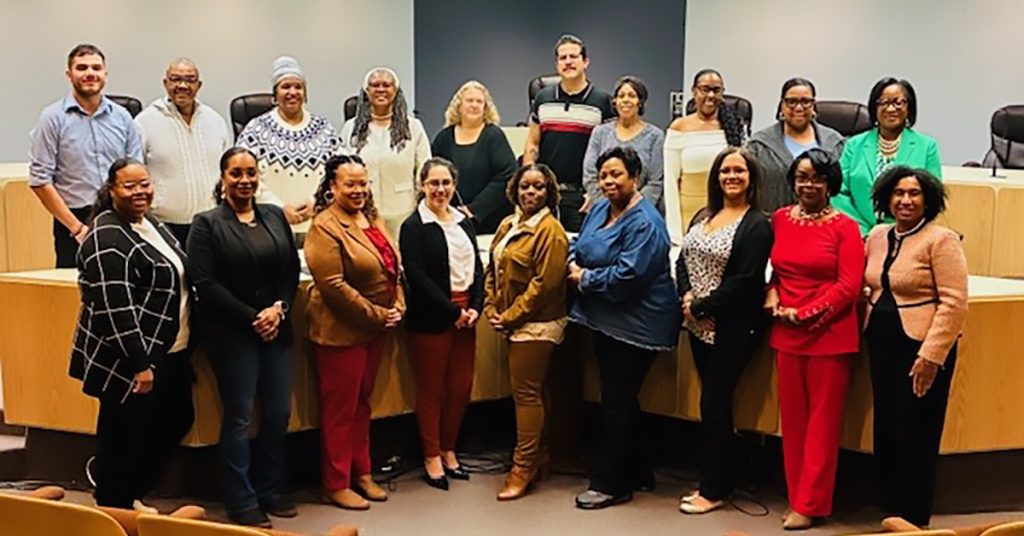
Support for big ideas

A value-added food chain

Change for the better

New medical partner

Economic foresight
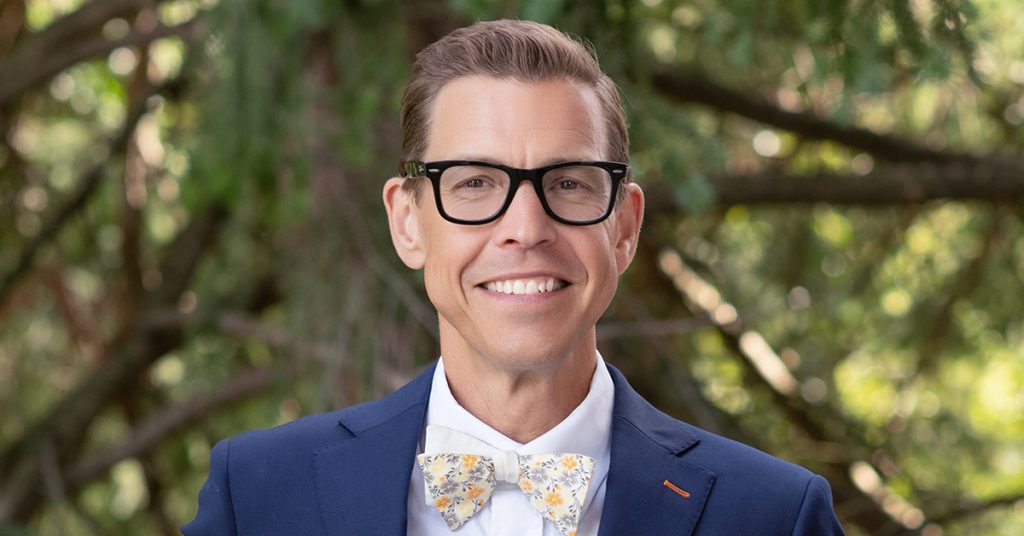
Professional advancement