
Region providers say AI augments, not replaces, human touch
In a high-pressure environment like an emergency department, mere seconds can determine a patient’s fate. For Franciscan Health Dr. Ryan Misek, a situation involving a pediatric patient highlights exactly how medicine is changing in the age of artificial intelligence.
The child had suffered a head injury and was showing signs of possible seizures. Traditionally, confirming this kind of diagnosis involves ordering a formal electroencephalogram and waiting for a specialized technician to arrive. The process, already labyrinthine, could be drawn out over hours. By the time the test was ready, the crucial clinical moment might have passed.
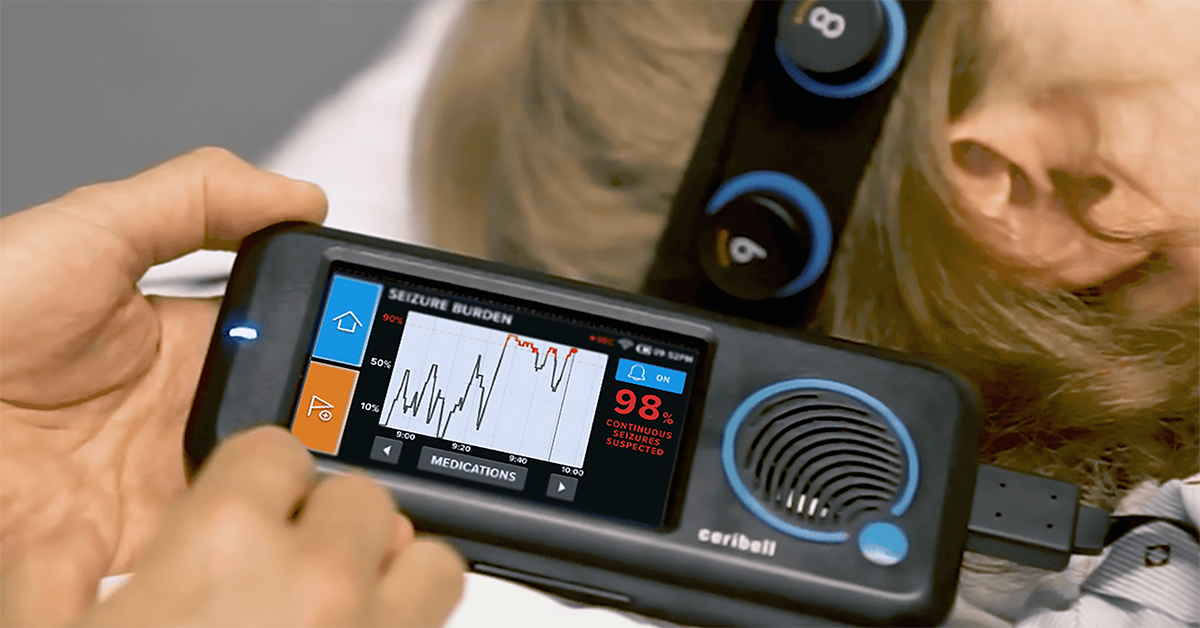
Instead, in this case, a bedside nurse was able to apply a device equipped with AI-enabled technology to the young patient right there in the emergency department.
Ceribell is a point-of-care EEG system that provides rapid, on-demand seizure detection for critically ill patients in emergency and intensive care settings, using a portable headband and software to quickly identify nonconvulsive seizures.
According to Misek, when the “green screen” appeared on the medical device, it provided instant reassurance to both the care team and the patient’s anxious family.
“We were able to use the Ceribell device and got the news that the patient was not having active seizures,” said Misek, a board-certified emergency physician and vice president of medical affairs at Franciscan Health. “We had additional reassurance that we could safely transport that patient and would not have to put the patient on a ventilator.”
With Ceribell in the mix, decisions were made with more confidence. Providers also had a clearer path forward.
This single case illustrates a broader, transformative shift occurring across health care systems. From crowded emergency rooms to everyday office checkups, AI is moving from a futuristic concept discussed in theory to practical, daily use.
“AI will be an asset in the health care world that will continue to grow,” said Dan Doherty, chief executive officer of Northwest Health – Porter.
Misek and other regional health experts see AI as a force that augments, rather than replaces, the specialized skills of health care professionals.
As AI becomes baked into more aspects of health care, its most immediate effect is not to push aside the physician, but to support and amplify their work.
“AI technology helps empower the expertly trained physician to provide care more precisely, accurately and efficiently,” Misek said.
Diagnostic safety net
AI’s strongest impact lies in its ability to process data faster and often more comprehensively than any one human could, said Misek and Dr. Scott Eshowsky, chief medical information officer at South Bend-based Beacon Health System. These gains in efficiency and capacity are especially valuable in the diagnostic phase, where time is of the essence. For example, Eshowsky sees benefits in stroke care and other high-stake scenarios.
“AI can speed up the detection of a large vessel occlusion and bring it to the attention of the care team earlier than what it would normally take to process an image,” he said. “If we can shave even 10 minutes off of that process, we’re likely going to achieve a better outcome for that patient.”
In July, Rush Medical System for Health announced that it would begin integrating Apple Vision Pro technology with GI Genius. The idea is to make insights related to scopes available directly within the physician’s field of view, without needing to look away from their operating screen. The study will evaluate the real-time use of this technology, designed by Cosmo Pharmaceuticals specifically for Apple Vision Pro.
“This immersive, hands-free experience is being introduced into clinical practice for the first time and is expected to set the foundation for a new standard in procedural medicine,” Rush said in a statement. “The GI Genius system uses artificial intelligence to increase the adenoma detection rate of colorectal polyps by as much as 14.4%.”
This principle of AI support extends to other diagnostic innovations as well. Beacon Health’s clinicians use a tool called OpenEvidence, which Eshowsky describes as a “medically trained ChatGPT.”
“When we ask a question, it does help us make diagnostic decisions, and it helps us develop a more comprehensive differential diagnosis,” Eshowsky said. “Now we can get (evidence) in minutes.”
But he maintained that these types of technology are tools only.
“A lot of us have started using those kinds of things very heavily,” he said. “But ultimately, we still take that answer that it gives us and apply our knowledge and judgment ⃛ so that we still remain in charge of how we approach the patient.”
AI as everyday assistant
While advanced diagnostics and imaging might capture initial headlines, some of the most profound effects of AI in health care are unfolding in the quieter, everyday routines of medical practice. For many providers, the biggest change is relief from administrative “click fatigue,” a burnout-inducing burden caused by decades of poorly designed electronic health records.
Eshowsky describes how voice recognition and ambient listening applications are making a difference on this front.
“It saves cognitive burden, and it actually allows us to connect with our patients better because we’re not sitting there with our fingers on the keyboard,” he said. “We’re now able to actually push the computer aside and actually talk to the patient.”
Providers are finding themselves less tethered to their screens and more able to make eye contact, listen and respond to patients’ needs in real time. It’s widely believed that this face time might improve the doctor-patient relationship.
Doherty said Northwest Health – Porter also has implemented ambient listening AI tools.
“This tool allows our physicians to converse with patients in the office setting without looking at a computer,” he said. “The physician can fully focus on talking with their patient, and they no longer need to sit down for 5 to 10 minutes and type out their discussion with the patient. This enables better physician-to-patient interactions and also improves physician efficiency and reduces burnout.”
Misek echoes this perspective, having trialed both AI scribes and human scribes in the ER. While the AI-generated notes still need careful review, he’s impressed by their accuracy and how much time they save.
“The feedback that I’ve gotten from my colleagues and from my own experience is that it’s fairly accurate,” he said. “AI-generated notes still require careful clinician review, but providers can spend some more time face to face with the patient if they don’t have to spend as much time at a computer either dictating or typing the encounter.”
This efficiency not only makes doctors’ jobs more enjoyable, but it also has the potential to reduce clinical errors and foster trust.
In radiology, the shift is similarly dramatic. Misek said AI-powered documentation tools have helped some radiologists at Franciscan Health achieve as much as a 20% increase in efficiency, allowing experts to focus on interpretation and communication rather than repetitive data entry.
Doherty said Northwest Health – Porter also is using AI to help doctors interpret images and find abnormalities.
“These tools come from machine learning across the country and allow AI to assist our radiologists in making the best diagnosis for our patients,” said Doherty who completed an AI program to help him better understand uses in the health care setting.
Eshowsky notes that Beacon has been a proactive adopter of such technologies, not only in radiology but across specialties. The hospital system has used voice recognition software for a decade and has been experimenting with multiple applications for AI-driven note generation.
“The notes are actually more complete,” Eshowsky said. “Our providers are getting them done in a more timely fashion, and I think that it translates actually into better care overall because it’s freeing up our brains to focus on more important things.”
Careful progress
Even as the promise of AI in health care becomes clearer by the day, doctors emphasize that no new technology is introduced lightly. The pace of implementation is careful, measured and always guided by a respect for privacy, security and medical ethics.
“We’re not ready for autonomous health care delivery,” Eshowsky said. “We hold high value in keeping the human in the loop.”
At Beacon, AI is viewed as an augmentative intelligence — not an autonomous actor. Decision-making remains firmly in the hands of trained clinicians. At the same time, privacy remains a top concern, especially as more data is collected and processed in ways unimaginable just a decade ago. Per Eshowsky, patient-encounter recordings are purged after seven days and are never used to train further models.
Misek supports this cautious and deliberate approach. Health care is an industry that changes thoughtfully, guided by evidence-based medicine and robust regulatory processes.
“AI technology in health care needs continued research,” he said. “If current practices do change with AI, it would be done in a manner that’s deliberate, safe and tested, where a current practice wouldn’t just change overnight.”
That means only technologies that have gone through the gauntlet of research, regulatory approval and peer-reviewed publication become part of the clinical workflow. If they fall short, they’re refined or abandoned.
“Northwest Health – Porter will continue to assess the best, proven systems and implement them within our hospital and medical group to improve patient care for those in our communities,” Doherty said.
This framework of checks and balances, doctors agree, is vital not just for patient safety, but for the continued public trust that underpins every doctor-patient relationship. Clinicians are taught to embrace innovation — but only when it’s proven to help, not just based on the novelty factor alone.
More powerful, more personal
Physicians predict that AI will become even more deeply woven into the fabric of health care. Eshowsky said the hope is that AI will not only summarize records and surface relevant orders but also anticipate physician needs as care decisions are made in real time.
“For the first time, I think there’s actually reason to be confidently optimistic about what technology can do for us,” Eshowsky said. “I think it’s going to transform the way we deliver care in a good way.”
With respect to personalization, AI is also being deployed outside traditional medical contexts to help patients feel seen and heard. According to a May 2025 report from the Indiana State Medical Association, “some Indiana practices use predictive modeling to find patients at risk for housing insecurity, transportation barriers or food shortages — enabling timely referrals to community resources.”
Eshowsky said the next stage of progress can mean aligning with the right parties. According to a press release, digital transformation company AVIA has named its second national Agentic AI cohort of health systems and an automation solution for primary care providers.
Beacon Health and Rush University System for Health are among the local institutions at the table. The goal of the collaboration is to help adopt Agentic AI to reshape operations, strengthen the workforce and improve patient access and outcomes.
“Through the Global Track, participating organizations will collaboratively examine the strategic, ethical and governance considerations necessary to scale Agentic AI safely and effectively,” AVIA said in the statement. “At the same time, Application Tracks will bring together operational leaders to focus on the high-impact areas of the revenue cycle, patient access and outcomes, and patient communications, ensuring that organizations translate enterprise strategy into real-world, measurable use cases.”
Purdue University’s Center for AI and Robotic Excellence in medicine also is researching Gen-AI and robotics for interventional medicine. Embodied AI is one concentration area. It focuses on “integrating artificial intelligence with wearables, cyber-physical systems, and robotics to enhance clinical and surgical performance,” according to its website.
The center’s research also focuses on better care. “By combining innovative technologies with embodied AI systems, the goal is to augment skills, reduce errors, and deliver expert care and training more effectively, rapidly and widely.” •
Read more stories from the current issue of Northwest Indiana Business Magazine.

Flexibility for working mothers

Heroic values on display

One-stop print shop

Power of collaboration

Avoid the unexpected

Childcare challenge

Beyond the prescription pad

New life for dormant buildings

Banks keep branching out

Professional advancement

